
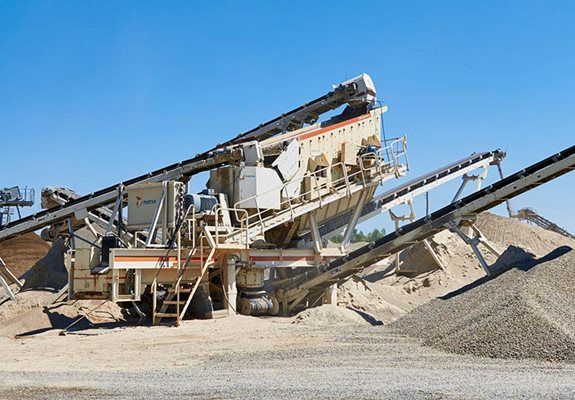
Crusher efficiency is a critical key performance indicator (KPI) for businesses in industrial sectors such as mining, quarrying and aggregate production. This guide includes realistic, actionable tips to maximize crushing efficiency at your organization.
One of the most reliable ways to improve crusher output is to invest in your equipment operators. Providing additional training opportunities to your team can help you increase efficiency by improving workplace safety and eliminating common process bottlenecks.
Training can also improve staff morale and build confidence, helping to increase job satisfaction and employee retention. Through training courses, operators become well-versed in the equipment they work with each day and become more confident in their operations. Efficiency and productivity increase as a result, providing performance data that further empowers your team.
Using the wrong crusher for your application can reduce efficiency and cause downtime. For example, machines better suited for secondary crushing are incapable of handling the same type of demand that primary crushers process during normal operations.
It’s vital to understand which types of crushers are most effective for specific job types:
If you need assistance selecting a crusher for your operations, working with an experienced sales professional who knows the specific types and models of equipment you work with can be helpful.
Fine-tuning your crusher to match your application is essential for optimizing your output without using more resources.
Some important settings you may need to change include:
Note that prescreening settings can also influence efficiency. Confirm that your system is using the appropriate screen and adjust settings as needed to match your requirements.
The technique your operators use to feed your crusher can significantly impact its output capacity. For example, choke feeding is ideal for jaw crushers because it maximizes the amount of material in the crushing chamber at any given time.
Additional techniques can also be used to further improve production. In-line feeding combined with the use of precrushing screens helps limit the risk of clogging the crusher by removing oversized particles and fines from the conveyor feed.
Using a hydraulic breaker or magnet to remove as much metal as possible from the feed can also help you increase uptime by reducing the amount of metal that enters the crusher. Although jaw crushers can handle metals such as steel, limiting the amount that enters the chamber can help prevent breakage and malfunctions.
Regular preventive maintenance helps maximize uptime and productivity by keeping your equipment in good operating condition. At predetermined intervals, technicians will inspect your crushing equipment and replace worn parts, restore fluid levels and clean the machinery’s interior.
Preventive maintenance works by identifying and addressing minor equipment issues before they can escalate into serious problems, which is essential for:
While larger businesses can often perform maintenance in-house, smaller facilities may need to work with external service providers to make sure their equipment receives the proper level of care.
Some newer models of equipment also enable predictive maintenance, which uses a system of artificial intelligence (AI) and internet-connected sensors to monitor equipment health in real time. Rather than waiting for specific dates to discover issues, you can find and address problems right away to minimize negative impacts.

Crusher efficiency is a ratio that represents a crusher’s ability to reduce material to the desired particle size. It compares the feed size to the product size during operation by analyzing several factors:
To calculate the ratio, simply compare the original particle size to the finished product. A 6:1 ratio is typically ideal for jaw crushers, which means the final product is reduced to one-sixth the size in one pass through the chamber.
Optimizing crushing operations is our specialty at Crushing Equipment Solutions™. We’re dedicated to providing the best crushing products for businesses across industries like mining and quarrying, so you can count on us to help you minimize crusher downtime and improve efficiency.
Our product selection includes a variety of leading equipment brands, including the following:
We also provide a full catalog of maintenance and repair services to help you maximize your crusher’s ROI.
As a full-service crushing equipment dealer and service provider, we’re dedicated to helping our customers improve crushing efficiency using the most straightforward tools and techniques. You can find us throughout Oklahoma and Texas, with locations in Oklahoma City, Tulsa, Paradise and Taylor.
Contact us online for more information about any of our crushing products and services, or visit your nearest location to discuss your needs in person.
